Guide · Craft & interiors
Pejaten Ceramics — Clay, Fire and Rice Straw
31 August 2026 · 5 min read
In the Tabanan region, far from the tourist bustle, lies Pejaten — a village where clay is still an element, not an industrial raw material. It is shaped by hand on a slowly turning wheel and fired in a blaze of rice straw. It is one of those places where the craft hasn't changed in generations.
A village born of exclusion
Pejaten has an unexpected history. In old Bali, potters were considered "impure" and were excluded from traditional villages — so they gathered in separate settlements, like Pejaten. What began as rejection became, in time, a source of pride: today the village is famous for its ceramics across Indonesia.
Clay, fire, rice
The technique is surprisingly simple — and that is precisely its beauty:
- A slow potter's wheel, turned by hand, not electricity — the potter feels the clay instead of forcing it.
- Firing in a blaze of rice straw — the same rice that on Bali is the goddess Dewi Sri lends its fire to bake the vessels. The straw leaves characteristic, uneven scorch marks.
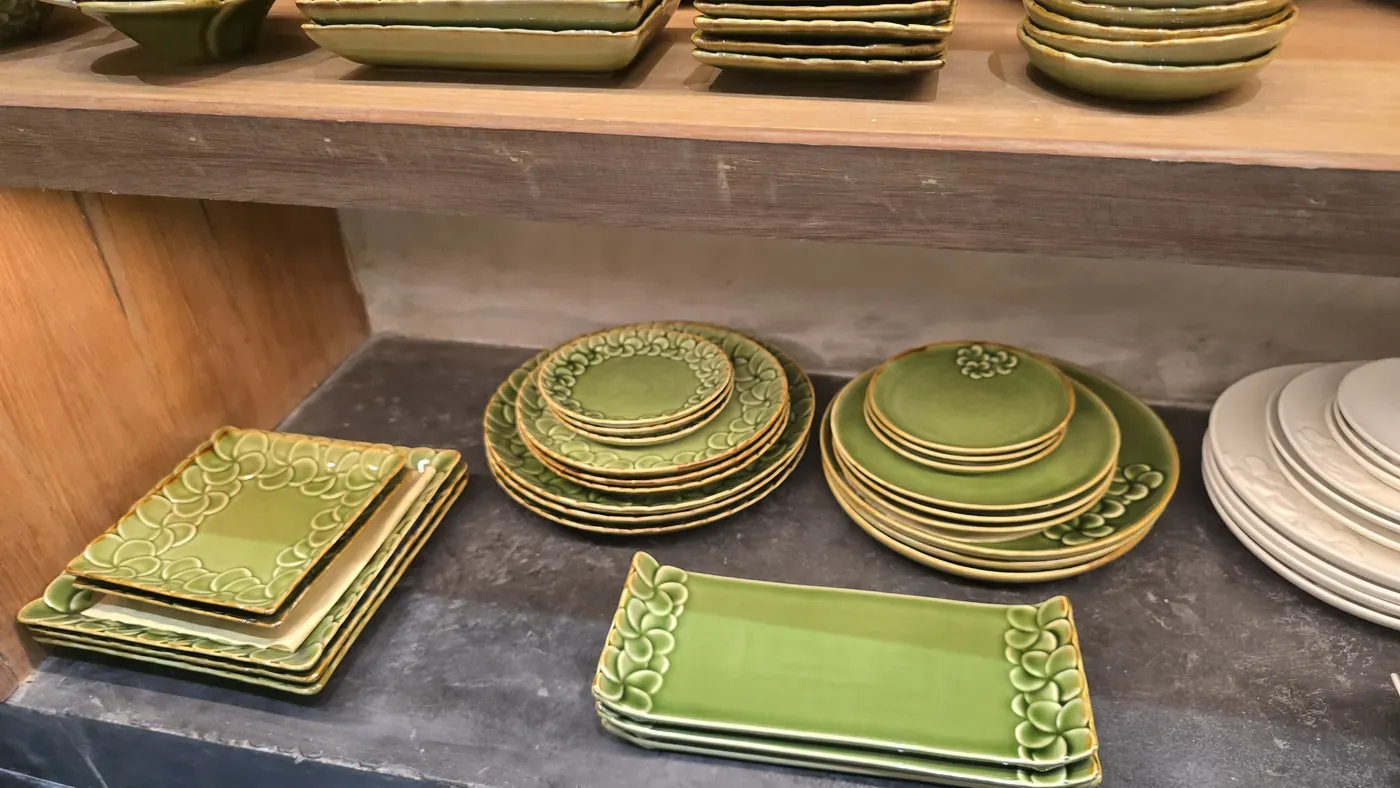
- Traditional colours — blue, brown, green — and natural, earthy, unglazed terracotta.
From temple roof tile to table bowl
Since the 1970s, Pejaten has produced the terracotta roof tiles (genteng) that crown Balinese temples and homes. Alongside them come ceremonial vessels for Hindu rituals, and everyday and decorative ceramics: bowls, vases, planters.
Pejaten ceramics embody the same philosophy visible across all Balinese craft: an object made of earth, shaped by hand, fired with flame from a rice field. No wonder it carries taksu — the spiritual energy that sets handicraft apart from a factory copy.
Frequently asked questions
- How does Balinese ceramics differ from factory-made?
- It is thrown by hand on a slow wheel and often fired with rice straw, which leaves uneven, natural markings. Factory ceramics are perfectly even and machine-glazed — they lack that "living" texture.
- Is Pejaten ceramics food-safe?
- Ceremonial and decorative vessels — yes, for their purpose. For direct contact with food, check the glaze and firing; traditional unglazed terracotta is best as decoration, a planter, or a fruit bowl.
- How did the potters' village of Pejaten come about?
- Out of historical exclusion — potters were once considered "impure" on Bali and settled in separate villages. Over time, Pejaten turned that into a source of pride and ceramic renown.
The shop opens in autumn 2026 — the first container is being filled now.
Join the First CircleThe list shops first — 48 h before opening