Guide · Craft & interiors
Balinese Style at Home — Boho, Japandi or Something More?
20 July 2026 · 6 min read
Type "boho interior" into a search engine and you'll get a hundred shades of beige and macramé. Type "japandi" — a hundred shades of grey and pale wood. Balinese style gets mistaken for both, yet it is something of its own: warmer than japandi, calmer than boho, and more deeply rooted in nature than either.
Here's how to carry the essence of Bali into your home — so that the interior feels like a home, not a souvenir shop.
What actually is Balinese style?
Balinese interiors — from traditional family compounds to the finest villas of Ubud — share a few constants:
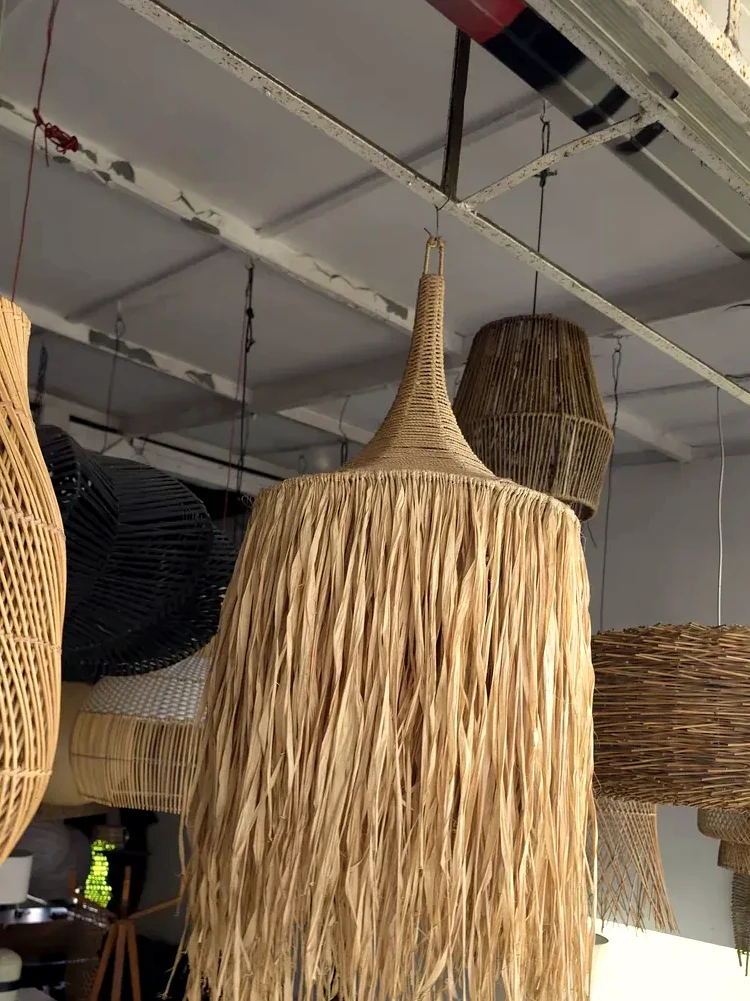
- Natural materials in the leading roles: teak, rattan, bamboo, volcanic stone, linen and cotton. Plastic does not exist.
- A warm, earthy palette: terracotta, the gold of dried rice, the green of the terraces, creams and deep brown — colours the island simply lifts from its own landscape.
- Craft instead of decoration: objects have a function and a story. A bowl is for fruit, not "for display".
- The line between home and nature is soft: plants, daylight, moving air.
- A place for ritual: a corner for incense, a tray of flowers, a space that serves nothing except calm — as in the morning ritual of canang sari.
Balinese vs boho vs japandi — a cheat sheet
| Balinese | Boho | Japandi | |
|---|---|---|---|
| Mood | calm, rootedness | freedom, eclecticism | discipline, minimalism |
| Wood | teak, darker, solid | painted, vintage | pale, oak/ash |
| Colour | terracotta, green, cream | bold accents, patterns | greys, black, white |
| Decor | craft with a story | plenty, layered | little, deliberate |
| Risk | the "souvenir shop" | chaos | coldness |
The good news: Balinese pieces season both styles beautifully — a teak bench will warm up japandi, and a single carved bowl will bring order to boho.
6 rules so you don't overdo it
- 1.One strong piece per room. A carved console OR a large bowl OR a textile on the wall. Not everything at once.
- 2.Solid wood as the anchor. Invest in one substantial teak piece — the rest can be simple and inexpensive. How to choose and care for it: our teak furniture guide.
- 3.A palette drawn from nature. Walls in creams and off-whites, accents in terracotta and muted green. Colour comes from objects, not paint.
- 4.Textures instead of patterns. The weave of rattan, the grain of wood, hand-glazed ceramics — these create the depth, not palm-leaf prints.
- 5.The real thing, not "in the style of". Mass-made imitation spoils the whole effect — because it lacks taksu, the spiritual energy a maker leaves in the work. How to spot the original: our piece on genuine Balinese handicraft.
- 6.Leave air. On Bali, space and light are the luxury. Given the choice: fewer things, better ones.
Where to start (on a budget)
Not with furniture. Start with the senses: incense scented with sandalwood and frangipani, a linen throw the colour of raw cloth, one handmade bowl on the table. A modest sum — and the interior begins to "smell of the island". Furniture will come with time (ours — in autumn, straight from Jepara).
Frequently asked questions
- Does Balinese style work in a small apartment?
- Yes — it's a style of objects and materials, not architecture. A low windowsill with a plant, a teak side table and good light do more than square footage.
- Which plants suit a Balinese-style interior?
- Large leaves: monstera, strelitzia, fiddle-leaf fig, kentia palm. One large plant rather than five small ones.
- Won't dark wood overwhelm a small flat?
- Not if you keep the background light (walls, textiles) and let the daylight in. Dark teak against a light backdrop is the safest contrast in this style.
The shop opens in autumn 2026 — the first container is being filled now.
Join the First CircleThe list shops first — 48 h before opening