Guide · Incense & rituals
Natural vs Synthetic Incense — How to Tell the Difference
27 July 2026 · 6 min read
Most incense on European shelves has one thing in common: it's dipped. Ready-made "blank" sticks are dunked in a synthetic fragrance compound and dried. They smell loud, cost pennies — and have little in common with the incense that has accompanied Balinese offerings for a thousand years.
The difference isn't snobbery. It's a question of what you breathe in your own home, and what you actually get for your money. Here's how to tell one from the other — before you even light it.
Two ways to make incense
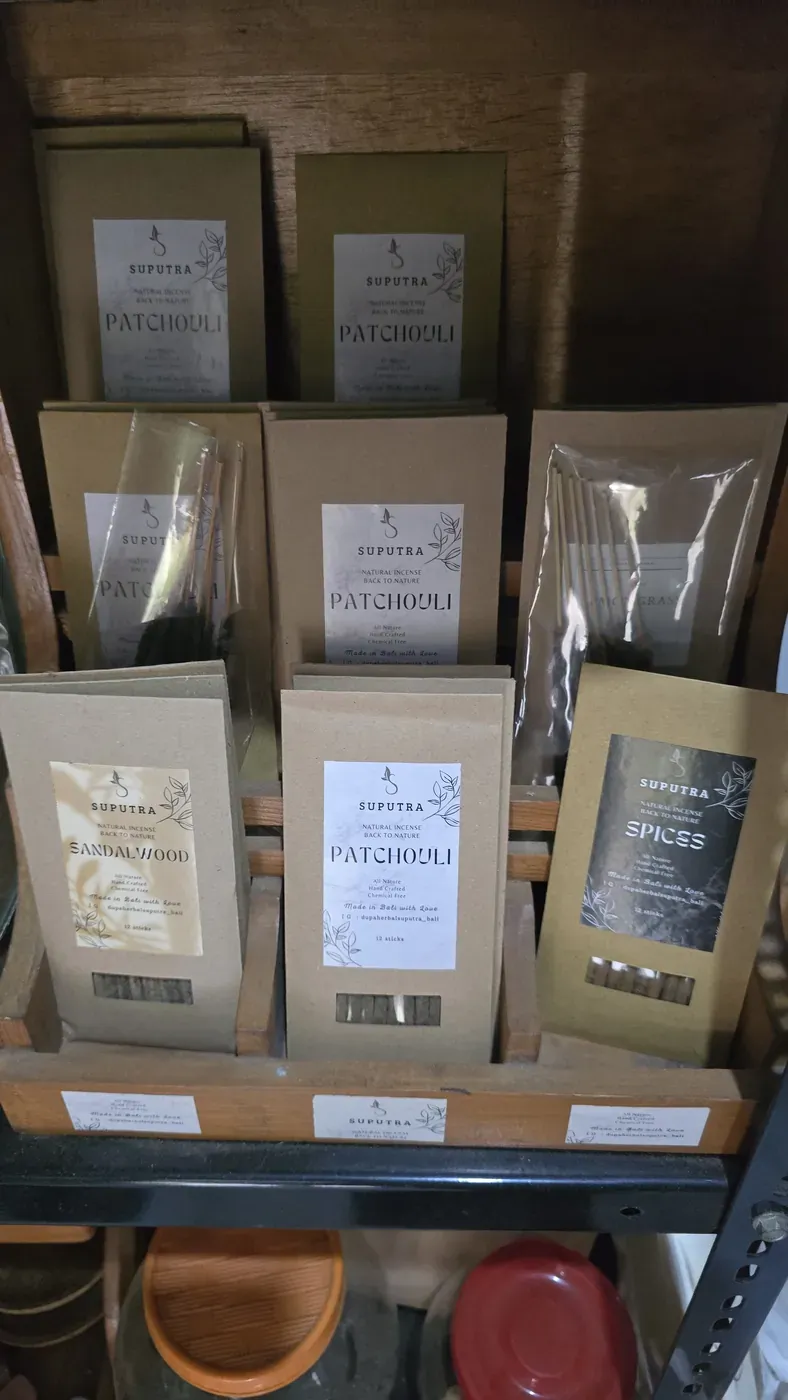
Dipped incense is a bamboo stick submerged in a liquid fragrance mix — often synthetic. Rolled incense (masala, dupa) is made from a paste: powdered resins, wood, herbs and natural oils, hand-rolled onto a core and dried in the sun. The first method is quick and cheap; the second — slow, and it smells of the truth.
6 signs of natural incense
1. The scent before lighting
Pick up a stick and smell it cold. Natural incense smells herbal and resinous, warm, subtle. Synthetic hits you with an intense, "perfumey" note straight from the packaging — because what you're smelling is the chemical fragrance, not the material itself.
2. The texture of the paste
Examine the surface. Natural paste is matte, slightly uneven, granular — you can see it was shaped by hand. A dipped stick is smooth and uniform, often coated in an even, glossy film of dye.
3. The smoke
Natural smoke is gentle and doesn't sting your eyes. Synthetic smoke can be thick and scratch your throat — the most common sign you're burning a chemical compound, not resin.
4. The scent after burning
Natural incense leaves a soft, rounded trace in the room. Synthetic — a sharp, "air-freshener" note that can weary the head after a longer session.
5. The colour
Bright, uniform colours (vivid violet, pink, blue) usually mean dye. Natural paste comes in muted, earthy shades — browns, greys, faded green.
6. Price and provenance
Hand-rolling costs money. A box of incense for pocket change is almost certainly mass-produced. And the simplest test of all: does the seller know where the incense comes from and what it's made of? It's the same transparency principle we describe in recognising genuine Balinese handicraft.
For more on how Balinese incense is made by hand, see our piece on Balinese incense.
Frequently asked questions
- Is synthetic incense harmful?
- Synthetic compounds can release more airway irritants when burned. If you're sensitive to smoke, choose natural incense and ventilate well.
- What does natural Balinese incense smell like?
- Most often of sandalwood, frangipani, resins and herbs — warm and subtle, without a sharp perfume note.
- Are "masala" and "dupa" natural incense?
- Usually yes — these are incenses rolled from a paste of herbs, resins and oils, as opposed to dipped sticks. It's still worth checking the ingredients with the seller.
The shop opens in autumn 2026 — the first container is being filled now.
Join the First CircleThe list shops first — 48 h before opening