Guide · Craft & interiors
A Balinese-Style Bathroom: a Step-by-Step Guide
3 September 2026 · 7 min read
A Balinese-style bathroom is an interior built from a few natural materials: a stone basin, teak wood, plants that tolerate humidity, warm light and simple accessories of coconut, rattan and clay. Its essence is not the number of decorations but the contrast of raw textures with plenty of empty, cream-coloured space, as in the open bathrooms of Balinese villas, where the shower stands under the open sky among ferns.
In this guide we go through the bathroom element by element: a basin of river stone or onyx, teak near water, plants that survive steam, light and fittings in the wet zone, textiles and accessories, the colour palette, the most common mistakes and a few numbers you need to know before buying: the weight of the basin, the diameter of the drain, the sealing of the stone.
Where to start: the stone basin
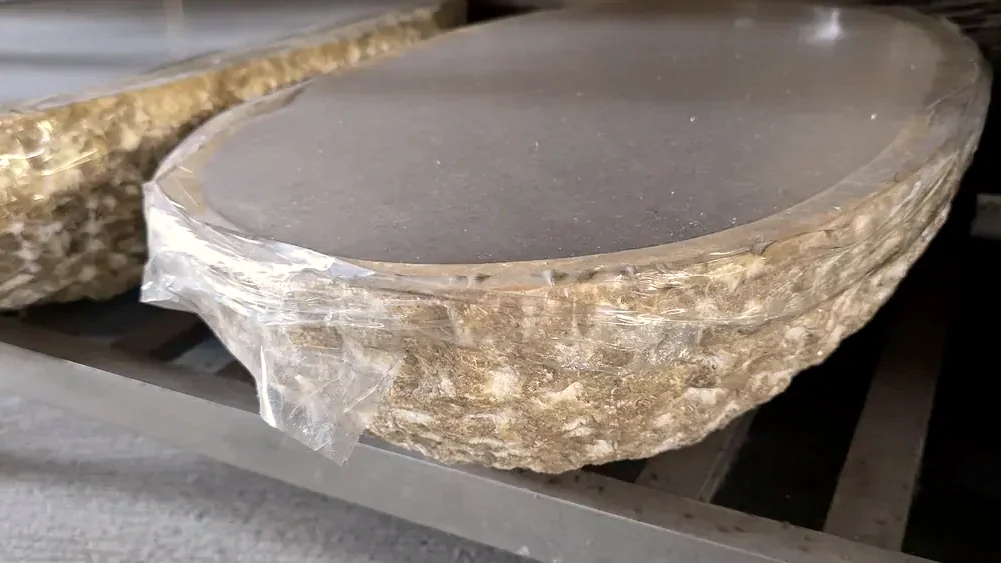
In a Balinese bathroom the basin is what the table is in a dining room: the point around which everything else is arranged. There are two main stones to choose from. A river stone basin is a boulder of andesite or basalt from the rivers of Java and Bali, hollowed and polished inside and left raw outside; it is dark, heavy and resistant to acids and knocks. An onyx basin is a translucent stone in shades of honey, green and white which, lit from below, looks like a lantern, but it is soft and reacts to acids: vinegar, lemon juice and descalers leave dull marks on it. We compare both in detail in our piece on river stone, onyx and paras.
Three numbers before you buy. Weight: a countertop basin of solid stone usually weighs 15–30 kg, so the counter and its fixing must carry it, and a light chipboard vanity is not always enough. Drain: the hole in the base is usually about 45 mm in diameter, for a standard click-clack waste and basin trap, but stone basins have no overflow, so the waste should be the unslotted type and a running tap should not be left unattended. Sealing: stone is porous; before installation and then every 6–12 months a penetrating sealer for natural stone is applied, which does not change the look but closes the pores against soap and cosmetics.
Wood in the bathroom: teak and its rules
Teak (Tectona grandis) is one of the few woods that cope well with moisture: it contains natural oils and resins, which is why boats and decks were built from it for centuries. In the bathroom it works as a counter under the basin, a shower bench, a duckboard, a framed mirror, a shelf and a cabinet. The rules are simple: the wood should not stand in pooled water, it needs air to dry between showers, and once a year it is worth wiping it with teak oil if it is to keep its honey colour; unoiled, it turns grey, which is also handsome. More practical detail in our piece on teak furniture for the bathroom and garden. Suar and mango, popular in furniture from Bali, are a poorer choice in a bathroom: they absorb moisture and move.
Greenery that survives steam
Plants do more in a Balinese bathroom than any decoration, but not every plant likes steam and half-light. Proven choices are ferns (Boston fern, maidenhair), which come alive in humidity, monstera and epipremnum (pothos), which forgive neglect and can climb the wall, peace lily, calathea and an orchid on the windowsill. All of them need light: a windowless bathroom is a place for cut greenery, a sprig of eucalyptus hung under the shower, or plants you swap every two weeks with those from the living room. Terracotta pots, ata baskets and coconut-shell covers complete the picture, as long as they do not stand directly in water.
Light: warm, low and safe
Balinese interiors are lit low and warm. In a bathroom this means light sources with a colour temperature of about 2700 K, ideally on a dimmer, plus one stronger light at the mirror for daily tasks. Rattan and bamboo lamps and woven shades throw a pattern of shadow on the wall that defines this style, but they have a limit: in the zones around the bath and shower, fittings must have an adequate IP rating (at least IP44 in the zone directly above the bath and around the shower, and higher still inside the bath or shower tray). So hang a woven shade without an IP rating outside those zones, above the basin or in the dry part, and leave installation in the wet zone to an electrician. For the fittings in our lighting category we state where they can be hung.
Textiles and accessories: fewer, but real
- Coconut-shell bowls — for soap, jewellery, cotton pads; wipe dry after rinsing and rub with coconut oil from time to time,
- Natural bar soaps — always on a draining soap dish, otherwise they turn to mush within days,
- Towels — cotton or linen in cream, terracotta or green, no patterns; one stronger colour is enough,
- Ata and rattan baskets — for towels and laundry, in the dry part; smoke-cured weave tolerates humidity better than plain rattan, as we describe in our piece on ata baskets,
- Incense — outside the humid zone: sticks absorb steam and stop burning evenly; better to light them after a bath with the window ajar, or keep them in the bedroom,
- Mirror — in a teak frame or a plain dark frame; no gilding or ornament.
Colours and the most common mistakes
The palette is the same as in Balinese style as a whole: cream on the walls and most surfaces, terracotta or dark wood as the main accent, the green of plants and ink (very dark brown or black) on the tap, the mirror frame and small details. Choose matt tiles, large format or earth-coloured; microcement and mineral plaster work even better. We write about the whole in our piece on Balinese style in the interior.
| Element | Material | What to watch |
|---|---|---|
| Basin | river stone, onyx | weight 15–30 kg, no overflow, sealing, onyx dislikes acids |
| Counter and bench | teak | not in pooled water, air flow, oiling once a year |
| Floor | matt porcelain, microcement, teak duckboard | slip resistance when wet, fall to the drain |
| Lamp | rattan, bamboo, weave | IP rating in the wet zone, warm 2700 K colour |
| Plants | ferns, monstera, epipremnum | light, overwatering, pot not standing in water |
| Baskets and bowls | ata, rattan, coconut shell | dry part, wipe, do not soak |
| Incense | herbal sticks | away from steam, ventilation, stable holder |
We see three mistakes most often. The first is excess: a Buddha figure, two rattan lamps, three baskets, pebbles in a jar and a shell mosaic in one small bathroom that stops being calm. The second is plastic pretending to be nature: “bamboo” PVC containers and synthetic rattan that quickly reveal what they are in humidity. The third and most serious is no ventilation: wood, weave and plants need the bathroom to dry out, so a working extractor fan or an opening window is a condition, not an extra.
What this means for the objects in your home
Everything begins with curiosity. Instead of buying a “Balinese set”, start with one object of real origin: a basin hollowed from a single boulder, a teak bench, a basket woven in Tenganan. In the bathroom category we gather these elements from the workshops we visited, and for each we state its weight, dimensions and what it dislikes. The rest of the bathroom can stay as it is; Balinese style is not a renovation but a few good decisions.
Frequently asked questions
- How much does a stone basin weigh, and will an ordinary vanity hold it?
- A countertop basin of solid river stone or onyx usually weighs 15–30 kg, larger models more. A solid wooden or stone counter on brackets, or a cabinet with a full base fixed to the wall, is enough; a light thin-board vanity on legs may sag. Check the weight of the specific piece before buying.
- Can teak stand under the shower?
- Yes, teak is one of the few woods that tolerate water, which is why shower benches and duckboards are made from it. The condition is air flow and drying between showers: a duckboard should have gaps and feet rather than lying flat in a puddle. Oiling once a year restores the colour.
- Which plants suit a bathroom without a window?
- No plant survives long without light, even with artificial lighting for a few hours a day. In a windowless bathroom it is better to rely on cut greenery, sprigs of eucalyptus, or rotation: a fern or epipremnum spends two weeks in the bathroom and then returns to a bright windowsill.
- Can a rattan lamp be hung in a bathroom?
- Yes, but outside the zones around the bath and shower, where fittings must have an adequate IP rating. A rattan shade without an IP rating is hung above the basin, in the dry part or in the hallway, while the wet zone gets fittings with a declared IP44 rating or higher. Installation is best left to an electrician.
- What should I seal a stone basin with, and how often?
- With a penetrating, non-gloss sealer for natural stone, applied to clean, dry stone before installation and then every 6–12 months depending on use. Onyx additionally needs protecting from acids: clean it with mild soap, never with vinegar or descalers.
The shop opens in autumn 2026 — the first container is being filled now.
Join the First CircleThe list shops first — 48 h before opening